Tuesday, 31 January 2017

Different Types of Drones

Hey guys
Types of drones:
Of course you can combine all the features of the drones in one drone.

What are the safety guidelines for drones recreational users?

  • Follow community-based safety guidelines, as developed by organizations such as the Academy of Model Aeronautics (AMA).
  • Fly no higher than 400 feet and remain below any surrounding obstacles when possible.
  • Keep your drones in eyesight at all times, and use an observer to assist if needed.
  • Remain well clear of and do not interfere with manned aircraft operations, and you must see and avoid other aircraft and obstacles at all times.
  • Do not intentionally fly over unprotected persons or moving vehicles, and remain at least 25 feet away from individuals and vulnerable property.
  • Contact the airport and control tower before flying within five miles of an airport or heliport. 
  • Do not fly in adverse weather conditions such as in high winds or reduced visibility.
  • Do not fly under the influence of alcohol or drugs.
  • Ensure the operating environment is safe and that the operator is competent and proficient in the operation of the drone.
  • Do not fly near or over sensitive infrastructure or property such as power stations, water treatment facilities, correctional facilities, heavily traveled roadways, government facilities, etc.
  • Check and follow all local laws and ordinances before flying over private property.
  • Do not conduct surveillance or photograph persons in areas where there is an expectation of privacy without the individual’s permission.

Saturday, 28 January 2017

Drone aerial photography

If you want to become a drone aerial photographer, you've come to the right place.
Have you ever watched a film scene where the camera pans over the mountains, stunning vistas, or some other wide-sweeping landscape? Drone aerial photography allows you to capture that same kind of landmark footage, minus the Hollywood effects. Instead of relying on a film crew, you only need is a remote-controlled drone, otherwise called an unmanned aerial vehicle by hobbyists, and camera equipment. And time. Lots and lots of time for practice.
For those of you who want to learn all about about this hobby, which is currently exploding in popularity across the world, Pocket-lint has detailed everything you need to know. We've discussed the equipment you'll want to buy and even some resources and clubs worth checking out. With the tips listed in this guide, you'll be one step closer to soaring and capturing amazing aerial views.
A drone is a simply an aircraft - relatively small - piloted either autonomously by onboard computers or by a remote control on the ground. Drones have been used for military and special operation applications in recent history, but modern technology has allowed companies to manufacturer commercial versions for consumer use. In this guide, we will discuss how to do aerial photography with drones for consumers.
Follow the law
Before you send a flying robot into the sky, check your local law. In the US, for instance, FAA guidelines stipulate that drones and other model aircraft must stay less than 400 feet above the ground and not within 3 miles of an airport or air traffic. Some states are strict when it comes to trespassing laws as well. Steering a drone over someone's house and property could be considered a trespassing violation.
Drones
Now that you've done your research into local law, you can start the process of finding the perfect drone to suit your needs. Introductory models such as the $80 Blade Nano QX are ideal for people just learning how to fly, because they're cheap. You will likely crash the drone during your first few flight attempts, so you don't want to invest a lot initially.

After you've practiced a bit, you can consider fully-assembled models such as the $750 3D Robotics' Iris or more popular models like DJI's Phantom series. The company's quadcopters start around $500. If you want a Phantom model that comes with an attached GoPro camera, you'll have to shell out about twice as much. One of the most well-rated setups currently on the market is the DJI Phantom 2.
Other drones worth considering include the Hubsan X4 micro quadcopter, Estes Proto X mini quadcopter, smartphone-controlled Parrot AR Drone 2.0, UDI U818A camera quadcopter, and STORM Drone 6 GPS. Keep in mind whether you want the aircraft to come with a camera, and if not, the amount of payload you want it to carry. You'll also want to look at how long-lasting the battery should be for your purposes and if you want to control the drone via a smartphone or remote.
Cameras
If you didn't select a drone with a built-in camera, you will need to get a video camera that will provide the best image quality for its size and weight. The GoPro Hero3 Black Edition is the standard when it comes to aerial videography and photography. It weighs only 73 grams and can record video (2,704×1,524 pixels) at 45Mbps. It also features built-in Wi-Fi for downloading your footage and maximum compatibility with OEM and third-party accessories.
But you don't need fancy cameras for aerial photography as long as you ensure there is no vibration, because that'll completely ruin your footage quality. Vibration can come from the drone, its engine, and air turbulence. Small drones bounce around a lot, for instance, so you'll need to use vibration isolators and gimbals (more on this later) to eliminate the possibility of vibration. Fast lenses that are sharp at large apertures will help too.
Stabilised aerial video is made possible with the inclusion of gimbals. A gimbal is a support that allows the rotation of an object around an axis. Note that a gimbal with a brushless motor can provide greater power-to-weight ratio. Gimbals for GoPro cameras are available for as little as $150 and can simply be bolted to the bottom of any aerial platform. The Zenmuse gimbal is a popular example.
Extra equipment
You can't truly experiment with drone aerial photography without getting a few other bits and bobs. You may want to see where you're flying while steering a drone from the ground, for instance. To do this, you can use something like a video transmitter, such as the Immersion RC 5.8ghz 600mw, which greatly increases the range of a 5.8GHz link, and then you can pair it with a Duo5800 or Uno5800 receiver on the ground to get noise-free video.
An analog video transmitter, like the Immersion RC, is used to broadcast real-time video from the camera. You then use the receiver, like the Duo5800, along with a monitor, smartphone, or even LCD glasses to see what the drone sees. The Fat Shark Dominator Goggles are popular glasses for viewing video feeds. An entry-level FPV (first-person view) system, such as the Ready Made RC 5.8GHz starter kit, can also be purchased ready to go for around $250.
And finally, some drones, or rather specific applications of aerial photography, may require additional things like a specialised RC remote or even anti-gravity motors. You should thoroughly research all the drone accessories available and how they can aid you as an aerial photographer.
There are numerous tips, in fact too many to cover here, when it comes to photography, but we will cover a few. First up: use a shorter lens on your camera, because the wind will knock your camera around otherwise. You will also want the fastest lens you can get such as a professional f/2.9 zoom lens. Fixed-focal length lenses are also excellent. Fast shutter speeds around 1/1,000 second at 200mm or even 1/500 at 100mm are necessary to ensure your footage is sharp.
Keep in mind, when it comes to lenses, anything shorter than about a 35 mm lens on a 35 mm camera or a 24mm lens on a DSLR might include the drone's landing gear. Capturing certain objects may also require a long lens like a 80-200 mm f/2.8 zoom. And if haze is a problem in your footage, and it often is, set your camera to high contrast and look at the histogram. You may even want to shoot with a red filter if getting black and white video.
Speaking of filters, UV and Haze filters tend to not work.
Safety
Read anywhere online about how to get started with drone aerial photography and the first tip you'll come across is practice. Similar to how pilots need to train before taking off in aeroplane, you will need to practice flying a drone. Nothing but time will make you get better at steering or capturing stunning aerial footage.
That said, whether you're just getting started or are a seasoned professional, there are some obvious safety rules you'll need to remember. Always think about what you might hit if your drone crashes. You should never fly over large crowds of people - unless you have a lot of experience and are confidence in your equipment. You should also avoid areas and altitudes where you could collide with manned aircraft or stumble upon unfriendly weather.
Certain low-end and medium-end drones can't even operate in extremely high altitudes because of the thin air (and their motors tend to freeze), so you'll want to analyse all the types of environments that both you and your drone can handle before attempting any flight.
Resources
It's important to have fun when doing drone aerial photography...and part of the fun can be looking into and discovering all the resources available to you. Online forums are great place to learn and engage with other people who love the hobby. Examples include DIY Drones, Multi-Rotor Forums, and the DJI Phantom Users Group on Facebook.
Dronestagram is a year old drone photography community that not only gives photographers a platform to share their images but also holds sponsored contests. Most recently, Dronestagram announced the winners of its first contest sponsored by National Geographic and Go Pro. The 2014 Dronestagram Photo Contest received entries from all over the world, and photos ranged from subjects like eagle soaring over Bali to Filipinos playing in a park on a Sunday morning.
There's also clubs you could join. The DC Area Drone User Group is the the largest UAV club in the US, while the Academy of Model Aeronautics will even teach you how to be safe and prevent accidents


Wednesday, 25 January 2017

6 Awesome Ways Drones Are Being Used Today

Just a few years back, you would never have heard the term “drone” with a very positive connotation. Whenever there was any talk of drones, you thought of wars, attacks on terrorists, and spying of certain areas using pilot-less planes.
The air surrounding drones has changed quite a bit in the past few years. With their growing presence in the media, their potential is becoming recognized more and more. They can be used for reasons other than spying and warfare. People are now using drones in many awesome ways.
Regardless of how much they are being used for recreation and other purposes, the fears associated with drones are always there. This is why you must always know the proper guidelines of flying a drone in your area. Also, you should be an expert drone controller before you start sending one into the air. A small mistake could cause big accidents. With these things in mind, here are some awesome ways drones are being used today.

1. Capturing Live Events

One of the coolest uses of drones in recent years has been for the capturing of live events. Drones are being commonly used these days to capture addresses by politicians, concerts, and live sports events. They can provide a perspective to the audience that no other technology can provide.
In the past, cameras hung from cables were used to capture aerial views. However, their use was pretty limited since they could only move on a straight cable. The drones used today are free-flying objects that can move in any direction you want.
When watching live events, you will often notice the small flying objects right in front of the stage. These are drones with 4-rotor blades carrying cameras and capturing amazing footage.

2. Surveying Dangerous Areas

Drones have opened up such possibilities for humans that exploring the world’s deepest corners has now become a much easier job. For example, geologists have to visit the most peculiar and dangerous parts of the earth to do their jobs. Sometimes, large organizations like NASA have to rely on satellite footage to know the structure of earth in certain dangerous areas. With drones, it is now possible to have a much closer look at places that are not easily accessible for human beings. These drones can go into these places and provide footage so humans can later visit with knowledge of what to expect in these remote areas.

3. Delivery of Small Items

Drones are being used by many big companies for the delivery of products to customers. Think about pizza chains sending pizzas to their customers using drones. These drones are powerful enough to carry multiple large pizzas on them and make the delivery process much faster. Amazon has been using drones in certain regions to deliver small items. However, sending large items this way could be hazardous.

4. Law Enforcement

This is one of the best uses of drones, despite the many fears that people have associated with drones being used by the police. Aside from surveying areas where terrorists are hiding, drones can also be used to identify the locations of criminals and the right plan of action if criminals are holding hostages. In fact, drones used by police can also shoot if the need arises.

5. Shooting Great Commercials and Movies

Most sci-fi and action movies require aerial shots. In the past, filmmakers had to use helicopters to direct aerial scenes in their movies, but hiring a helicopter and shooting on it can be annoying and expensive. With drones, you don’t have to go through that hassle or disruption. Using expert drone controllers means clean footage that is exactly what the director wants. It seems that modern cameramen and their crews will have to learn to fly drones if they want to protect their jobs in future.

6. Keeping an Eye On Wildlife

With the rising numbers of threatened and endangered wildlife populations, human interest in conservation and protection is growing. Keeping an eye on these animals is a top priority for organizations working in this field. However, when humans enter animal habitats, they can do more harm than good. There is now a better way for these organizations to keep an eye on wildlife without disturbing the peace. Drones have provided a way for these organizations to do their jobs without hurting the animals they are trying to save.

Final Words

There is no end to how drones will be used in future. Even today, companies are thinking of new creative ways to use them. Other than these professional ways of using drones, there are some recreational ways to enjoy with them too. Could there be a better selfie than an aerial selfie of you and the whole island you’re on? In addition to that, drones are being used as a modern type of gaming, where drone pilots from around the world come together in one place, race their drones, and win great prizes.


Hubsan X4 (H107L) Quadcopter

So, you’re looking for the best quadcopter with camera. You have plenty of options, but which of these quadcopters are the best?

If you’re inside the marketplace for a new drone, I’ll help you make the best choice based on your desires so that you can select the high-quality drone for yourself. Unlike all the other drone review sites you might see, we’re one of the only homemade website still around.

It is really tough to find a micro quadcopter with a built-in camera in cheap price, but the Hubsan X4 is an exception to the rule.  When you first open the box the quad is tiny and can actually fit in the palm of your hand, but it’s capable of capturing photos and videos of your indoor flights. In fact, the X4 is hardly bigger than a smartphone, yet, it’s capable of providing flyers with endless hours of fun. If you’re looking for a quadcopter you can carry to the office, the Hubsan X4 is the proper choice. In this Hubsan X4 H107L review, you’re going to discover how. let’s get started!

Hubsan X4 (H107L) Quadcopter Review

Here are some key features of Hubsan X4 H107L RC Quadcopter-

Remote distancearound 100 meters
Battery type3.7V 240mAh lithium polymer battery
AA Battery4 Required
Charging Timeabout 40 minutes
Flight Duration7-9 minutes
Camera Resolution 0.3 Megapixels
Camera PerformanceAverage
Control Frequency2.4GHz
Dimensions2.3 x 2.3 x 1 inches
Weight29 gram
Skill LevelBeginner

What’s SO COOL About The Hubsan X4?
First of all, it is a micro quad and actually doesn’t cost too much. it is ready to fly version which means that it comes with everything you want right out of the box. It has 6-axis stabilization that is a superb step up from the 3-axis stabilization that was in the earlier version. This stabilization makes it really stable in flight and even able to fly in the wind! While it is simple to get this quad in the air, as a beginner, it takes a while to really master the controls and our recommendation would be to pick up a protection ring to save your rotors. Some other extremely good thing would be to grab a crash pack as it comes with pretty much everything you want to prepare ahead of time when you do crash, and you may! So, if you take care of it, the Hubsan X4 H107L quadcopter is an excellent model to consider. Check out our quick starter guide at the bottom of this article and keep reading….

Getting Started:Hubsan X4 (H107L) Quadcopter Review

SIZE & DESIGN

The first thing you’ll realize about the H107L is its very small size (fit in the palm of your hand). This quadcopter isn’t much larger than a smartphone, and weighs about 29 grams without the battery! The X4 flies very aggressively and gives responsive, easy-to-use controls that even whole beginners can get used to quite quick. The quadcopter’s smooth design is accompanied by an all-black coating with a couple of white streaks along both sides of the frame. Just like the Hubsan X4 H107C, the H107L comes with small rubber toes designed to absorb landings.
This mini-drone has a tendency of getting troubled around by the wind because of its lightweight. So, try to avoid flying it outdoors when weather conditions are not so good

Battery Life

The Hubsan X4 is powered by a 3.7V 240mAh lithium polymer battery. When battery completely charged, assume a flight time of about 7- 9 minutes. Keep in mind that it is only an average time period– your real flight time depends on how aggressively you fly your quadcopter, as well as whether or you’re not flying in the wild wind. Let’s not forget to mention in this Hubsan X4 H107L review that charging the battery to its maximum capacity takes about 40 minutes which is extremely fast compared to other models. Considering that the flight time for the drone isn’t that lengthy, I would suggest you buying extra batteries. That doesn’t cost too much and can extend your flight sessions.

Flight Performance

No drone review would be complete without covering quadcopter’s flight performance. Hubsan X4 H107L drone is speedy. not only it is fast, however, it’s also exceptionally agile, responsive, and maneuverable. The quadcopter’s infamous Anti-Flip Mode prevents you from performing single-button flips with your quadcopter. Remember that anti-flip mode can be activated ONLY when you’re flying on “Expert Mode”. If you’re seeking out a quick, acrobatic quadcopter at an inexpensive price, then this is really a top candidate to consider. If I had to describe the drone’s overall flight performance in a single word, it would be “fantastic”. When pressing the right joystick in a specific route, the drone will easily fly there.

Remote Controller

The funny thing is The Hubsan X4’s transmitter looks like a modified PS4 controller with style! The remote controller comes with-
  • an LCD screen
  • two joysticks (right & left)
  • flight mode buttons (for increasing/decreasing transmitter sensitivity)
  • trim buttons (to counteract drifting)
  • a power button

The Hubsan X4’s transmitter is a 4 channel 2.4GHz unit that features independently adjustable channel sensitivity. Unfortunately, the protocol Hubsan uses is proprietary, which means you can’t use any transmitter other than ones made by the manufacturer company. Some awkwardly-shaped controllers can be resulting in sore hands/thumbs. But, this isn’t the cause with the X4’s transmitter. As far as transmitter signal distance is concerned, you’ll be able to fly the X4 up to 90 meters away.

The parts on this quad are small and light, can easily be pulled out. But, you don’t have to take any stress. Because its parts are inexpensive and easily replaceable.
As an alternative, you need to make sure that you can purchase good enough replacement parts for your Hubsan X4 which are easily installed. In case you need any accessories for your quadcopter, contact us and I’ll email you the solution.

Fly in the Dark

The latest version comes with 4 LED lights (2 blue,2 white), one in each corner. These lights are very bright and allowed you to fly through the night sky with comfort.


Uses of Drones in Construction Projects

  1. Surveying

You can use drones to quickly survey your job site and build maps. Instead of using human resources, heavy machinery & expensive surveying tools, that produce complex data, you can get the job done in half the time & money, with greater accuracy.
  1. Showing Clients the Progress

When clients stay away from the job site and cannot afford to come to the site again & again & your current pictures are just not doing justice, drones can be an inventive way to keep them happy. Just be sure to cover only those areas that are in good progress 😉 .

construction project drone monitoring progress
  1. Monitoring Job Sites

When you have to frequently shuttle between multiple job sites, or have taken up simultaneous renovation & facelift for multiple properties; putting up a drone to monitor the progress, work, safety standards and much more can save you a lot of energy, time & money.
  1. Inspecting Structures

Instead of employing heavy software, lots of people and relying on complex readings, you can employ a drone to get a first hand view of how solid your structures are, how aesthetically pleasing they are coming up, and where they are moving out of the plan, all in a jiffy.
  1. Better Safety Records

With your eyes & ears in the sky, all the time, you will be in a much better position to locate that unstable pillar, precariously balanced laborer and not deep enough excavations. If, you keep up the drone – survey, gradually you will build an excellent safety system and your reputation.
  1. Keeping the Project On-track, On-Budget

By identifying the parts of the project that are going off-track, having the ability to prevent any causalities, rigorously monitoring your job sites; you will be much better prepared to remove any additions to project time and cost.
Sounds like a plan? So, go ahead and make your mark with a drone in construction projects spearheading this trend in your industry or just take your next home remodeling to the next level!

Farming Revolution; time to play drones on your field...


Drone technology will give the agriculture industry a high-technology makeover, with planning and strategy based on real-time data gathering and processing. PwC estimates the market for drone-powered solutions in agriculture at $32.4 billion. Following are six ways aerial and ground-based drones will be used throughout the crop cycle:

www.greatdronereviews.com


1. Soil and field analysis: Drones can be instrumental at the start of the crop cycle. They produce precise 3-D maps for early soil analysis, useful in planning seed planting patterns. After planting, drone-driven soil analysis provides data for irrigation and nitrogen-level management.
www.greatdronereviews.com

2. Planting: Startups have created drone-planting systems that achieve an uptake rate of 75 percent and decrease planting costs by 85 percent. These systems shoot pods with seeds and plant nutrients into the soil, providing the plant all the nutrients necessary to sustain life.

3. Crop spraying: Distance-measuring equipment—ultrasonic echoing and lasers such as those used in the light-detection and ranging, or LiDAR, method—enables a drone to adjust altitude as the topography and geography vary, and thus avoid collisions. Consequently, drones can scan the ground and spray the correct amount of liquid, modulating distance from the ground and spraying in real time for even coverage. The result: increased efficiency with a reduction of in the amount of chemicals penetrating into groundwater. In fact, experts estimate that aerial spraying can be completed up to five times faster with drones than with traditional machinery.
www.greatdronereviews.com

4. Crop monitoring: Vast fields and low efficiency in crop monitoring together create farming’s largest obstacle. Monitoring challenges are exacerbated by increasingly unpredictable weather conditions, which drive risk and field maintenance costs. Previously, satellite imagery offered the most advanced form of monitoring. But there were drawbacks. Images had to be ordered in advance, could be taken only once a day, and were imprecise. Further, services were extremely costly and the images’ quality typically suffered on certain days. Today, time-series animations can show the precise development of a crop and reveal production inefficiencies, enabling better crop management.

5. Irrigation: Drones with hyperspectral, multispectral, or thermal sensors can identify which parts of a field are dry or need improvements. Additionally, once the crop is growing, drones allow the calculation of the vegetation index, which describes the relative density and health of the crop, and show the heat signature, the amount of energy or heat the crop emits.

6. Health assessment: It’s essential to assess crop health and spot bacterial or fungal infections on trees. By scanning a crop using both visible and near-infrared light, drone-carried devices can identify which plants reflect different amounts of green light and NIR light. This information can produce multispectral images that track changes in plants and indicate their health. A speedy response can save an entire orchard. In addition, as soon as a sickness is discovered, farmers can apply and monitor remedies more precisely. These two possibilities increase a plant’s ability to overcome disease. And in the case of crop failure, the farmer will be able to document losses more efficiently for insurance claims.

What's the difference between a drone, UAV, and a quadcopter?

The term "drone" is lazy and inexact.  However, it's also becoming like "Thermos"(TM) and "Kleenex" (TM): a common usage that most people would agree refers to X.  In this case, "X" would be an unmanned aircraft, specific type undefined, but a blind flying robot of some sort. (I decline to accept the spinmeisters' attempt to call them "remotely piloted aircraft," since they have a habit of slipping their leashes and taking the pilot out of the equation way too often for my taste.)

Think of unmanned aircraft as being exactly the same as manned aircraft, but without the body or bodies inside.  The only real difference is that there has to be a way of pointing them the way you want them to go from somewhere else, which for unmanned aircraft requires an electronic datalink of some type.  So, unmanned aircraft might be fixed-wing airplanes, helicopters, lighter-than-air blimps, or some very creative hybrids. 

Since they don't have to be built to carry the weight of a person, they can be built smaller and less expensively, with more of what they can do in terms of speed or lifting power devoted to carrying out a task of some type.  They also can be built very large, capable of covering long distances or carrying very heavy payloads.  The only limits are imagination and a plan for what you want to do with one.

A "quadcopter" is a generic term for a rotary-wing aircraft with four main rotor systems and no tail rotor.  There's nothing that says it has to be unmanned, but common usage of the term these days has given it that implied qualifier.  Also, "quadcopters" flown for hobby or recreational use (but certainly not for business, because that's not provided for in aviation rules yet) pretty much all come down at the small end of the size spectrum.

So:

1.  It isn't wrong to call almost any kind of remotely or self-directed vehicle a "drone."
2.  All unmanned aircraft may be considered "drones."
3.  It's basically impossible to come up with a currently flying example of a quadcopter that isn't an unmanned aircraft (part of an "unmanned aircraft system") and therefore, at the end of the day... a drone.

UDI U818A RC Quadcopter

So, you’re looking for the best quadcopter with camera. You have plenty of options, but which of these quadcopters are the best?

If you’re inside the marketplace for a new drone, I’ll help you make the best choice based on your desires so that you can select the high-quality drone for yourself. unlike all the other drone review sites you might see, we’re one of the only homemade websites still around.

Video Player
00:00
05:22

UDI RC is one of the most reputable names in the quadcopter industry; they are famous because they produce inexpensive and high-quality drones that accommodate to both novices and serious hobbyists. This UDI drone comes with various control options that allow the user to fly it in all directions, and it comes with a camera to capture all of the in-flight action. It’s a low-budget drone, however, the manufacturers didn’t skimp on product functions.The UDI U818A 2.4 GHz lives up to the hype; it’s a sleek quadcopter with a camera which is best for indoor and outdoor flight. It’s best for people who are seeking out a satisfactory product that they don’t need to spend a ton of cash on.

Here are some key features of UDI U818A RC Quadcopter Drone-

  • Remote distance-About 30 meters
  • AA Battery– 4 required
  • Battery type– 3.7V lipo 500 mAh Battery
  • Charging time– 12o minutes
  • Flying Time– 6-9 minutes
  • Camera type– 2 MP
  • Weight– 4.6 ounce
  • Skill level- Beginner
  • Stability- 6 AXIS GYRO with posture control

Design

Minimal is the word that springs to mind for the layout of the UDI U818A. There truly isn’t a lot there. The frame (which also surrounds and protects the rotors) is made of light, lean plastic, with the electronics suited in a small hollow underneath the center.
The rotors of the UDI U818A are similarly minimal, 5.25 inches in diameter and manufactured from the same, light plastic. Most low-end quadcopters use friction to connect the rotors to the motor shaft, however, this one uses a small screw to lock them in place. This makes them less probably to pop off, but also makes them more difficult to replace. A small screwdriver, for this purpose, is included, along with a spare set of rotors.
Some of the LED lights are placed around the frame of the quadcopter, including white LED strips underneath the center, blue and red lights on the motors (indicating front and back, respectively) and a single white forward-facing LED.

Camera Type and Video Quality

The camera is small, a flat lozenge-shaped lump that connects to the body by power wires. The microUSB card that stores the video and still images fits into one side. A forward-facing camera takes HD video and HD pictures with fantastic color and white balance. Film resolution has been upgraded to 1280 × 720 at 30 frames per second. removable Micro-SD (TF) card stores sufficient for several flights. Data port and USB data Cable – upload your new AVI and JPEG files to Facebook, Instagram, e mail, Photoshop.
The colors are rather bright, making my bluejeans look nearly fluorescent, for instance.Thedigital camera picks up a rather annoying flicker from fluorescent lights which may render the video unwatchable.

UDI U818A RC Quadcopter Review

Battery Life

The small, 500mAh battery slides tightly into a holder on the bottom of the body. I measured the battery life of the small 500mAh battery of the UDI U818A at about 6-9 minutes, which is pretty average for a cheap drone like this. You get the warning when the battery runs out. The included charger takes approximately 2 hours to recharge the small battery from a power socket. It’s a long time for a small battery, and with only a single battery included and no way to recharge from a car battery or USB port, so, this is a serious issue. Luckily, spare batteries are available for less than $9, so it is inexpensive to have a couple of charged spares available, assuming you keep in mind to remove and charge every in turn.

Tuesday, 24 January 2017

Time for fun and play

81b1swoz9sl-_sl1500_


Air Wars Battle Drones: The Best Toy Drone of 2017

A lot of parents looking to buy their kids toy drones in this time of year. However, you really have to be careful when you’re choosing drones at the lower end of the catalog, as you’d be surprised just how different their qualities can actually be. Air Wars is one of the better alternatives I’ve tested, and their battle Drones 2.4 GHz – 2-pack is an entire heck of a lot of fun. Air Wars Battle Drones comes ready to battle right out of the box with 2 drones, 2 remotes, 10 weapons, 2-3.7v Rechargeable Lithium-Polymer Batteries and 2 USB charging cables. Battle Drones takes you from beginner to advanced with 3-speed settings and 4 pre-programmed attack moves – Tornado Attack, 360 Spin Attack, Circle Attack and Ram Attack. Customize your drones with the weapons pack and get ready to knock your rival out of the sky. Air Wars Battle Drones are geared up with plastic weaponry like hooks and “saws” (they’re not sharp at all) that are supposed to help pilots take down their opponents.
Let the battles begin! Load your weapons, launch your drone and knock your rival out of the sky. Because the best drones for competitive air battles is the Air Wars battle Drones.


Top 5 Best Quadcopters for Aerial Filming

Using Quadcopters for filming

Even if you own the best video camera ever made, creating a stable good quality aerial clip is always going to be a challenge. This is especially true if you shoot from a helicopter or microlight plane. For one thing its very expensive to do and other thing you will need some very good equipment to steady the camera during flights.
Thanks to quadcopters, aerial filming is now easier and safer than ever.  At the moment DJI lead the way in quadcopters and we have the best ones here. We have tested all of these and each is good in its own way.


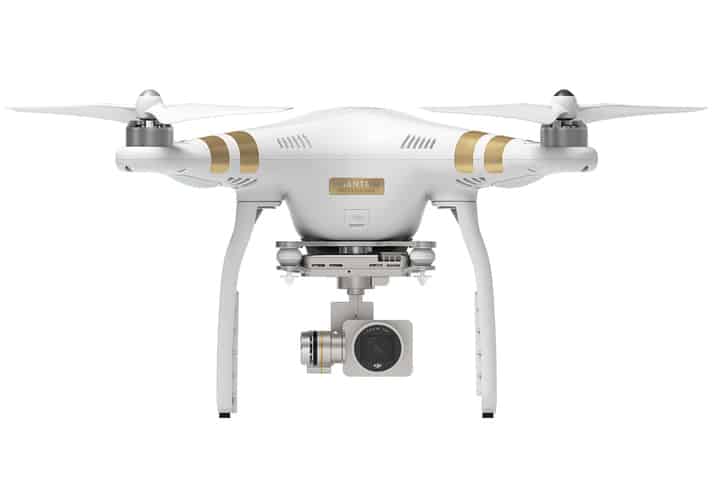
DJI Phantom Vision 3 Plus – 4K Footage An A Budget

Phantom3_4k_quadcopterdrone

The Phantom Vision 3 is one of the best drones to come out recently for many reasons.Take a look at the review to see some of these reasons. If you don’t want to spend much over $1000 then this is the drone to look at. We have successfully used this on set to produce broadcast quality footage.

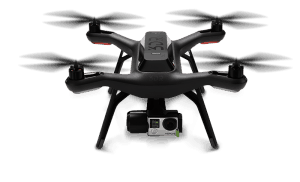
3DR SOLO Quadcopter – Add Your Own 4k Action Camera

3dr solo smart drone

3DR have created a quadcopter With Dual 1GHZ linux companion CPU’s and by being the only drone that can automatically control both the copter and the position of the camera at the same time. You will provide you own camera for this drone. Great bit of tech, grab it quick.


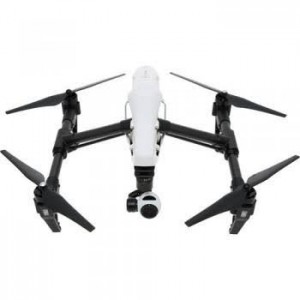
DJI Inspire  4K – The first 4K filming drone

whats the top quadcopter ?

The Inspire from DJI is the most popular 4K quadcopter available today. The difference between this and many of the other drones out is the fact that this can film in professional 4K resolution and has a long battery life. This is the pro’s drone.


DJI Phantom 2 HD Vision+ Best Hd quadcopter ?

Among the best quadcopters on the market, the  Phantom 2 Vision+ is still considered one of the best, what with its ability to record super-smooth video because of its 3-axis gimbal. With a built-in FPV link and redesigned HD camera, you can stream live video and stills from the quadcopter to your smartphone. When it comes to convenience, the Vision 2 + trumps the rest because the gimbal and a camera are already attached to the device, eliminating setup headaches.


DJI Phantom Vision 2 – Great Value Quadcopter

The next best quadcopter is the Vision 2. This is quite a bit cheaper than the Plus and may be good enough for many users. It still films in 1080p but doesnt come with the gimbal camera mount. The footage taken from the vision 2 can, however be smoothed out easily to match that of the Vision 2 Plus. Take a look at the Vision 2 test to see more.

Parrot AR.Drone 2.0 (Power Edition) Quadcopter Review

If you’re inside the marketplace for a new drone, I’ll help you make the best choice based on your desires so that you can select the high-quality drone for yourself. unlike all the other drone review sites you might see, we’re one of the only homemade website still around.


The Parrot AR Drone 2.0 is one of the best Wi-Fi controlled quadcopter on the marketplace. You can fly it via a smartphone or tablet which makes it a totally attractive choice compared to similarly priced models on the market.  The Parrot AR Drone 2.0 power edition Quadcopter is the modern version of AR’s famous series of personal drones. The power version introduces a new black color scheme with a variety of colored rotors and more importantly, a huge development in battery life – up to 36 minutes! That’ Actually awesome,  with a total of 36 minutes of flight time, you can unleash the full potential of your Parrot AR.Drone 2.0 and become the master of the sky! What I really like most about this version is that it’s extraordinarily versatile- you can perform tricks and stunts at the push of a button, as well as maintain a level hover for capturing beautiful aerial photos. To top it all off, the drone’s HD 720p camera will allow you to capture all of the fun and store it immediately to your mobile device. In this Parrot AR Drone 2.0 review, I’m going to dive deeper and show you everything it has to provide.

Here are some key features of Parrot AR.Drone 2.0 drone-

Remote distance50 meters
Battery type11.1V 1500mAh 2 HD(High Density) batteries
Charging Timeabout 90 minutes
Flight Durationup to 36 minutes
Front Camera Type90° wide-angle diagonal lens camera, CMOS sensor
Front Camera Resolution 1280×720 pixels (720p)
Vertical Camera Type60° wide-angle diagonal lens camera, CMOS sensor
Vertical Camera Resolution320×240 pixels (QVGA)
Video FrequencyFront- 30 fps : Vertical- 60 fps
Image Format JPEG
Flight Speedmaximum 3 m/s
Weight1 pound
Dimensions23 x 23 x 5 inches
Operating SystemLinux 2.6.32
System Requirement Of Mobile DeviceiOS version 6.1 or above/ Android system version 4.0 or above
Remote Control MethodAndroid or iOS App
Supported Apps Include: AR.Freeflight (primary), AR.Race 2 App, AR.Rescue 2, and Astro Drone App
Skill Levelintermediate/expert  

In the Parrot AR.Drone 2.0 Power Edition, you get two 1500 mAh High-Density lithium-polymer battery packs! Isn’t it too cool!  You get 3 times the battery life of the regular stock model, jumping from 12 to 36 minutes. With 36 minutes of flying time, it can capture more aerial photographs. Let’s not forget to mention in this Parrot AR.Drone 2.0 quadcopter review that charging the battery to its maximum capacity takes about 1 hour 30 minutes which is fast compared to other models.

Applications of Quadcopter

Research platform

Quadcopters are a useful tool for university researchers to test and evaluate new ideas in a number of different fields, including flight control theory, navigation, real time systems, and robotics. In recent years many universities have shown quadcopters performing increasingly complex aerial manoeuvres. Swarms of quadcopters can hover in mid-air,fly in formations,and autonomously perform complex flying routines such as flips, darting through hula hoops and organising themselves to fly through windows as a group.

There are numerous advantages to using quadcopters as versatile test platforms. They are relatively cheap, available in a variety of sizes and their simple mechanical design means that they can be built and maintained by amateurs. Due to the multi-disciplinary nature of operating a quadcopter, academics from a number of fields need to work together in order to make significant improvements to the way quadcopters perform. Quadcopter projects are typically collaborations between computer science, electrical engineering and mechanical engineering specialists.

Military and law enforcement

Quadcopter unmanned aerial vehicles are used for surveillance and reconnaissance by military and law enforcement agencies, as well as search and rescue missions in urban environments. One such example is the Aeryon Scout, created by Canadian company Aeryon Labs, which is a small UAV that can quietly hover in place and use a camera to observe people and objects on the ground. The company claims that the machine played a key role in a drug bust in Central America by providing visual surveillance of a drug trafficker's compound deep in the jungle (Aeryon won't reveal the country's name and other specifics).
After a recreational quadcopter (or "drone") crashed on the White House lawn early in the morning of January 26, 2015, the Secret Service began a series of test flights of such equipment in order to fashion a security protocol against hostile quadcopters.

Commercial use

The largest use of quadcopters in the USA has been in the field of aerial imagery. Quadcopter UAVs are suitable for this job because of their autonomous nature and huge cost savings.
In the United States, the legality of the use of remotely controlled aircraft for commercial purposes has been the source of legal issues. Raphael Pirker, a professional photographer, was fined by the FAA in 2012 for "endangering people on the ground" (a regulatory infraction) after he used a Zephyr fixed-wing drone—a "a five-pound Styrofoam model airplane"—to take aerial photos of the University of Virginia's campus in 2011. In March 2014, a federal administrative law judge ruled in Pirker's favor, determining that his drone was a "model aircraft" and thus not subject to FAA regulations on other types of aircraft.The FAA appealed to the National Transportation Safety Board; the NTSB appointed a new administrative law judge, who overturned the earlier finding and ruled that under the FAA's enabling act, the FAA had jurisdiction to regulate "any contrivance invented, used or designed to navigate, or fly in, the air," irrespective of whether it was unmanned or manned. Pirker was fined $10,000, but in January 2015 settled the matter with the FAA, agreeing to pay a $1,100 fine without admitting guilt. According to a report in Aviation Week, the matter "became a cause célèbre among the model aircraft and recreational and commercial small drone communities."

In December 2014, the FAA released a video detailing many best practices for new drone pilots, including advisories such as keeping their machines below 400 feet and always within visual sight.
In December 2013, the Deutsche Post gathered international media attention with the project Parcelcopter, in which the company tested the shipment of medical products by drone-delivery. Using a Microdrones md4-1000 quadrocopter packages were flown from a pharmacy across the Rhine River. It was the first civilian package-delivery via drones.
As quadcopters are becoming less expensive media outlets and newspapers are using drones to capture photography of celebrities.
As of March 2015, the United States created an interim policy for the legal use of unmanned aerial vehicles for commercial use where each operator can apply for an exemption filed under Section 333 with the FAA. As of August 2015 the FAA had granted over 1300 petitions to different use cases and industries.


Unmanned aerial vehicle

An unmanned aerial vehicle (UAV), commonly known as a drone, unmanned aircraft system (UAS), or by several other names, is an aircraft without a human pilot aboard. The flight of UAVs may operate with various degrees of autonomy: either under remote control by a human operator, or fully or intermittently autonomously, by onboard computers.

Compared to manned aircraft, UAVs are often preferred for missions that are too "dull, dirty or dangerous" for humans. They originated mostly in military applications, although their use is expanding in commercial, scientific, recreational, agricultural, and other applications, such as policing and surveillance, product deliveries, aerial photography, agriculture and drone racing. Civilian drones now vastly outnumber military drones, with estimates of over a million sold by 2015.

In 1849 Austria sent unmanned, bomb-filled balloons to attack Venice. UAV innovations started in the early 1900s and originally focused on providing practice targets for training military personnel.


UAV development continued during World War I, when the Dayton-Wright Airplane Company invented a pilotless aerial torpedo that would explode at a preset time.

The earliest attempt at a powered UAV was A. M. Low's "Aerial Target" in 1916. Nikola Tesla described a fleet of unmanned aerial combat vehicles in 1915. Advances followed during and after World War I, including the Hewitt-Sperry Automatic Airplane. The first scaled remote piloted vehicle was developed by film star and model-airplane enthusiast Reginald Denny in 1935. More emerged during World War II – used both to train antiaircraft gunners and to fly attack missions. Nazi Germany produced and used various UAV aircraft during the war. Jet engines entered service after World War II in vehicles such as the Australian GAF Jindivik, and Teledyne Ryan Firebee I of 1951, while companies like Beechcraft offered their Model 1001 for the U.S. Navy in 1955. Nevertheless, they were little more than remote-controlled airplanes until the Vietnam War.

In 1959, the U.S. Air Force, concerned about losing pilots over hostile territory, began planning for the use of unmanned aircraft. Planning intensified after the Soviet Union shot down a U-2 in 1960. Within days, a highly classified UAV program started under the code name of "Red Wagon". The August 1964 clash in the Tonkin Gulf between naval units of the U.S. and North Vietnamese Navy initiated America's highly classified UAVs (Ryan Model 147, Ryan AQM-91 Firefly, Lockheed D-21) into their first combat missions of the Vietnam War. When the Chinese government showed photographs of downed U.S. UAVs via Wide World Photos, the official U.S. response was "no comment".

The War of Attrition (1967–1970) featured the introduction of UAVs with reconnaissance cameras into combat in the Middle East. In the 1973 Yom Kippur War Israel used drones as decoys to spur opposing forces into wasting expensive anti-aircraft missiles.

In 1973 the U.S. military officially confirmed that they had been using UAVs in Southeast Asia (Vietnam). Over 5,000 U.S. airmen had been killed and over 1,000 more were missing or captured. The USAF 100th Strategic Reconnaissance Wing flew about 3,435 UAV missions during the war at a cost of about 554 UAVs lost to all causes. In the words of USAF General George S. Brown, Commander, Air Force Systems Command, in 1972, "The only reason we need (UAVs) is that we don't want to needlessly expend the man in the cockpit." Later that year, General John C. Meyer, Commander in Chief, Strategic Air Command, stated, "we let the drone do the high-risk flying ... the loss rate is high, but we are willing to risk more of them ... they save lives!"
During the 1973 Yom Kippur War, Soviet-supplied surface-to-air missile batteries in Egypt and Syria caused heavy damage to Israeli fighter jets. As a result, Israel developed the first UAV with real-time surveillance. The images and radar decoys provided by these UAVs helped Israel to completely neutralize the Syrian air defenses at the start of the 1982 Lebanon War, resulting in no pilots downed. The first time UAVs were used as proof-of-concept of super-agility post-stall controlled flight in combat-flight simulations involved tailless, stealth technology-based, three-dimensional thrust vectoring flight control, jet-steering UAVs in Israel in 1987.

With the maturing and miniaturization of applicable technologies in the 1980s and 1990s, interest in UAVs grew within the higher echelons of the U.S. military. In the 1990s, the U.S. DoD gave a contract to AAI Corporation along with Israeli company Malat. The U.S. Navy bought the AAI Pioneer UAV that AAI and Malat developed jointly. Many of these UAVs saw service in the 1991 Gulf War. UAVs demonstrated the possibility of cheaper, more capable fighting machines, deployable without risk to aircrews. Initial generations primarily involved surveillance aircraft, but some carried armaments, such as the General Atomics MQ-1 Predator, that launched AGM-114 Hellfire air-to-ground missiles. CAPECON was a European Union project to develop UAVs, running from 1 May 2002 to 31 December 2005.
As of 2012, the USAF employed 7,494 UAVs – almost one in three USAF aircraft. The Central Intelligence Agency also operated UAVs. In 2013 at least 50 countries used UAVs. China, Iran, Israel and others designed and built their own varieties.

Introduction to Quadcopter


A quadcopter, also called a quadrotor helicopter or quadrotor, is a multirotor helicopter that is lifted and propelled by four rotors. Quadcopters are classified as rotorcraft, as opposed to fixed-wing aircraft, because their lift is generated by a set of rotors (vertically oriented propellers).


Quadcopters generally use two pairs of identical fixed pitched propellers; two clockwise (CW) and two counter-clockwise (CCW). These use independent variation of the speed of each rotor to achieve control. By changing the speed of each rotor it is possible to specifically generate a desired total thrust; to locate for the centre of thrust both laterally and longitudinally; and to create a desired total torque, or turning force.

Quadcopters differ from conventional helicopters which use rotors which are able to vary the pitch of their blades dynamically as they move around the rotor hub. In the early days of flight, quadcopters (then referred to either as 'quadrotors' or 'helicopters') were seen as possible solutions to some of the persistent problems in vertical flight; torque-induced control issues (as well as efficiency issues originating from the tail rotor, which generates no useful lift) can be eliminated by counter-rotation and the relatively short blades are much easier to construct. A number of manned designs appeared in the 1920s and 1930s. These vehicles were among the first successful heavier-than-air vertical take off and landing (VTOL) vehicles.  However, early prototypes suffered from poor performance, and latter prototypes required too much pilot work load, due to poor stability augmentation and limited control authority.

In the late 2000s, advances in electronics allowed the production of cheap lightweight flight controllers, accelerometers (IMU), global positioning system and cameras. This resulted in a rapid proliferation of small, cheap consumer quadcopters along with other multi rotor designs. Quadcopter designs also became popular in unmanned aerial vehicle (UAV or drone) research. With their small size and maneuverability, these quadcopters can be flown indoors as well as outdoors.

At a small size, quadcopters are cheaper and more durable than conventional helicopters due to their mechanical simplicity. Their smaller blades are also advantageous because they possess less kinetic energy, reducing their ability to cause damage. For small-scale quadcopters, this makes the vehicles safer for close interaction. It is also possible to fit quadcopters with guards that enclose the rotors, further reducing the potential for damage. However, as size increases, fixed propeller quadcopters develop disadvantages over conventional helicopters. Increasing blade size increases their momentum. This means that changes in blade speed take longer, which negatively impacts control. At the same time, increasing blade size improves efficiency as it takes less energy to generate thrust by moving a large mass of air at a slow speed than by moving a small mass of air at high speed. Therefore, increasing efficiency comes at the cost of control. Helicopters do not experience this problem as increasing the size of the rotor disk does not significantly impact the ability to control blade pitch.
Due to their ease of construction and control, quadcopter aircraft are frequently used as amateur model aircraft projects.